
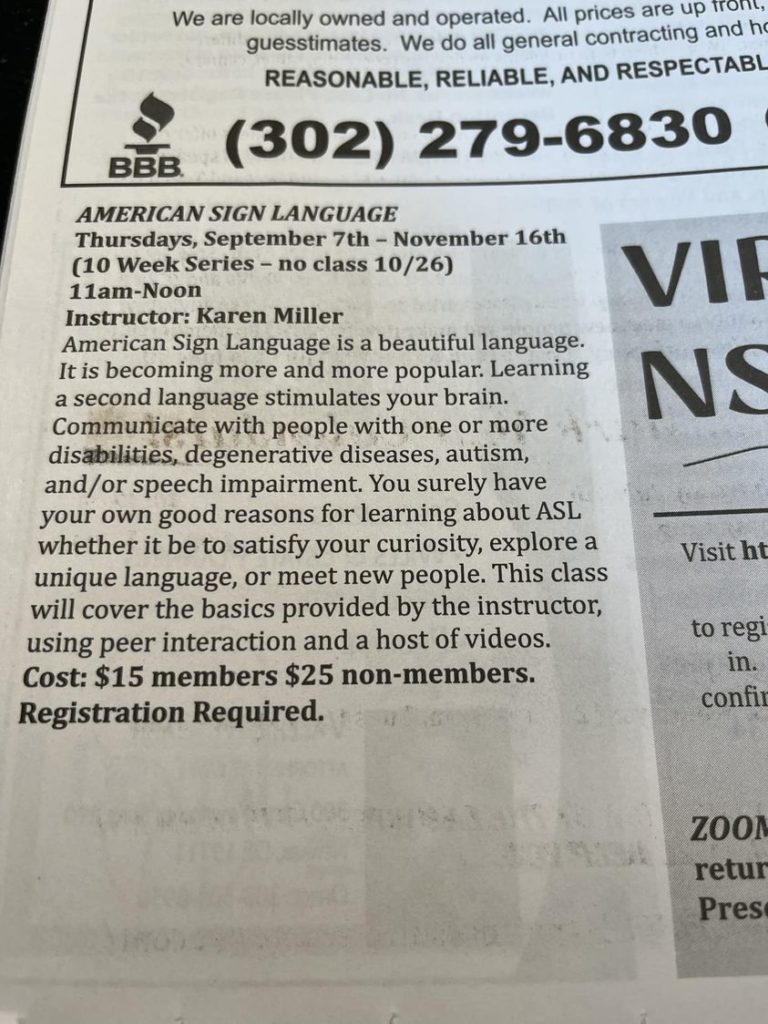
Thursdays starting Sept. 7 – Nov. 16, 2023 from 11am-Noon
No classes on Oct. 26
Instructor: Karen Miller
Location: Newark Senior Center
Thursdays starting Sept. 7 – Nov. 16, 2023 from 11am-Noon
No classes on Oct. 26
Instructor: Karen Miller
Location: Newark Senior Center
Ryan Cuevas, through his attorney Andrew Rozynski, alleged in a federal lawsuit that the municipal court violated the Americans with Disabilities Act and the New Jersey Law Against Discrimination by failing to provide him a sign language interpreter in a timely fashion.
In short, Cuecas claimed that he received a parking ticket on August 22, 2019 and was informed in January his license would be suspended for failing to present proof of liability insurance.
“Just days before that hearing, the New Jersey Motor Vehicle Commission informed Plaintiff in a letter dated January 17, 2020, that it was suspending his registration and driving privileges because of a separate infraction—his failure to present proof of liability insurance,” Wigenton wrote in her 21-page decision.
“Although Plaintiff promptly resolved the liability-insurance issue, the NJMVC refused to reinstate his driving privileges until JCMC adjudicated the Ticket.”
According to the suit, Jersey City Municipal Court only offers an “interpreter day” on the first Wednesday of each month, and while he was initially scheduled to be heard on January 22, 2020, a sign language interpreter wasn’t available until August 5, 2020.
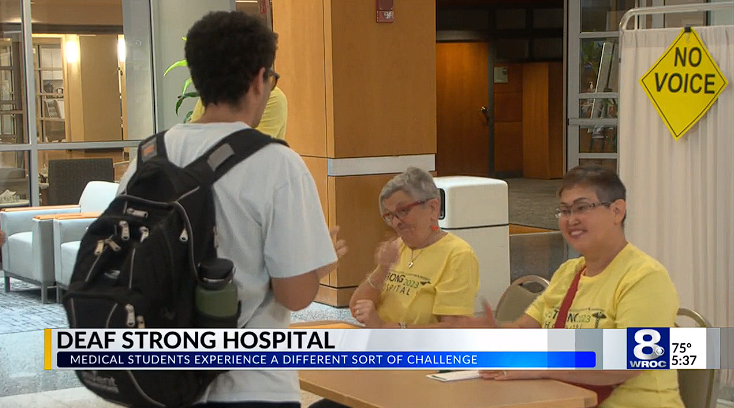
ROCHESTER, N.Y. (WROC) — Medical students at Strong Memorial Hospital got a one-of-a-kind experience Friday.
The hospital hosted its ‘Deaf Strong Hospital’ event for the first time since 2019. It brings hearing and deaf people together to illustrate to students what deaf individuals, people with hearing loss, or any people who don’t speak English go through when navigating health care systems.
How do they do it? They staff the hospital with members of the deaf community and have hearing individuals who have limited to no knowledge of sign language try and get through an appointment.
“For example, when you go into a waiting room and a deaf person is waiting, they’re constantly watching to see that they’re not missing the person reading their name verbally, since they can’t hear,” National Center for Deaf Health Research’s Kelly Matthews said. “So, they’re trying to read the person’s lips and are constantly watching. So here, [students] watching and waiting for their names to be fingerspelled. So, this is the first time they’re experiencing not knowing when their name is actually being called.”
Students also received a lecture about deaf culture and health care disparities. Officials with the hospital say the combination of the lecture and the simulation give students a good idea of the challenges deaf individuals go through.