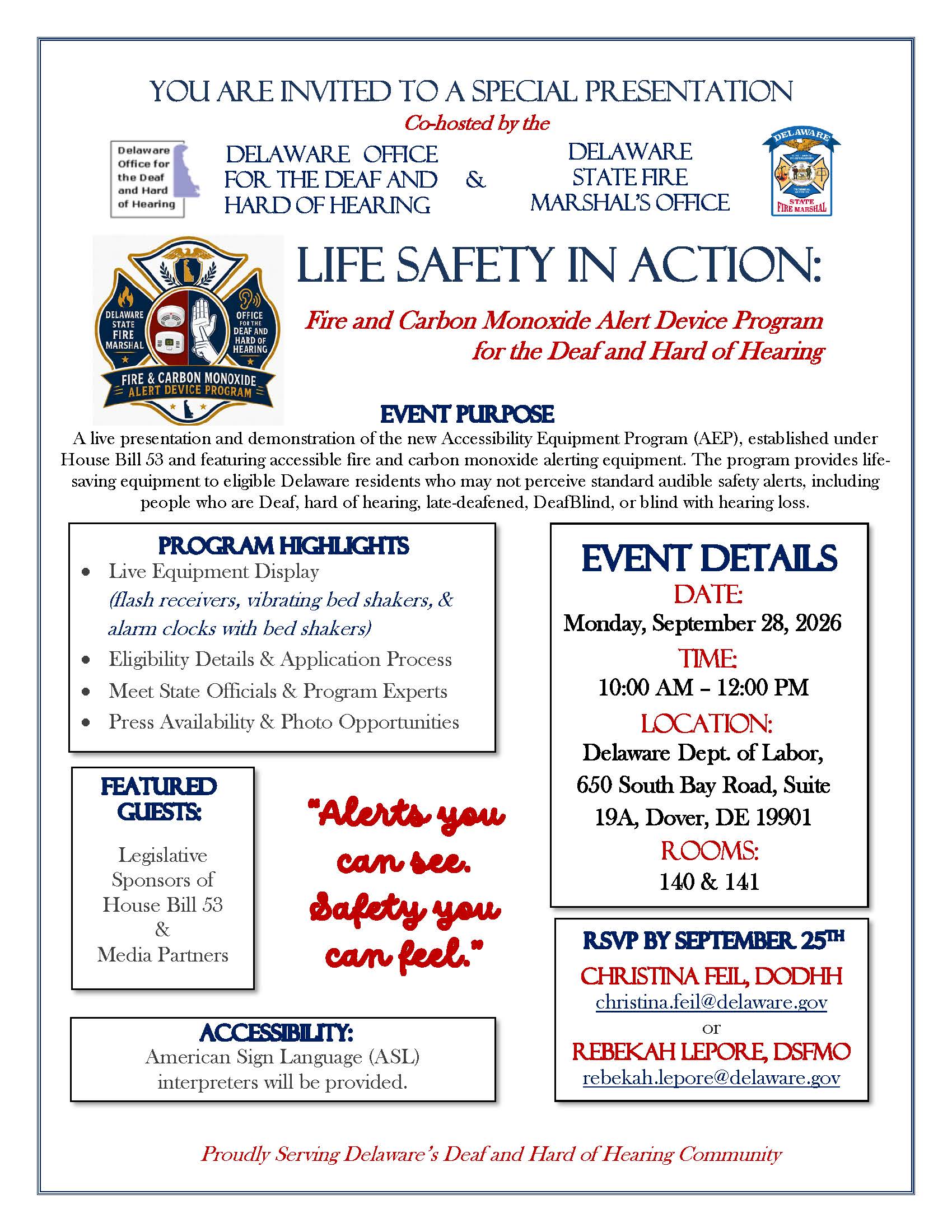
The Delaware Office for the Deaf and Hard of Hearing (DODHH) and the Delaware State Fire Marshal’s Office (DSFMO) proudly invite your members, to attend our upcoming presentation and live demonstration, “Life Safety in Action: Fire and Carbon Monoxide Alert Device Program for the Deaf and Hard of Hearing.”
The event will take place on Monday, September 28, 2026, from 10:00 AM to 12:00 PM at the Delaware Department of Labor in Dover.
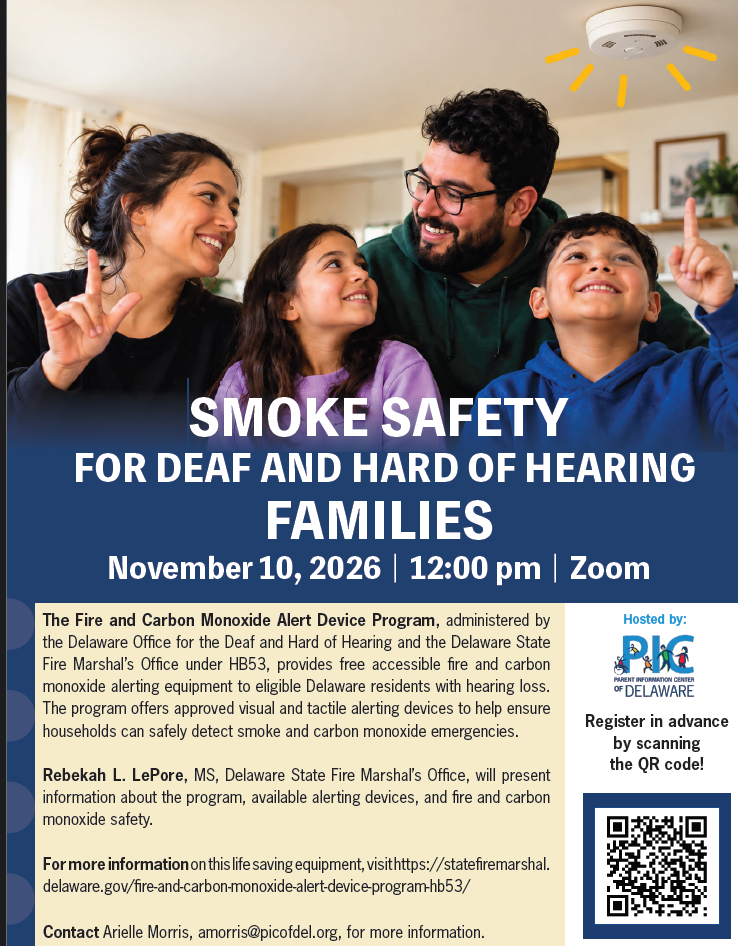
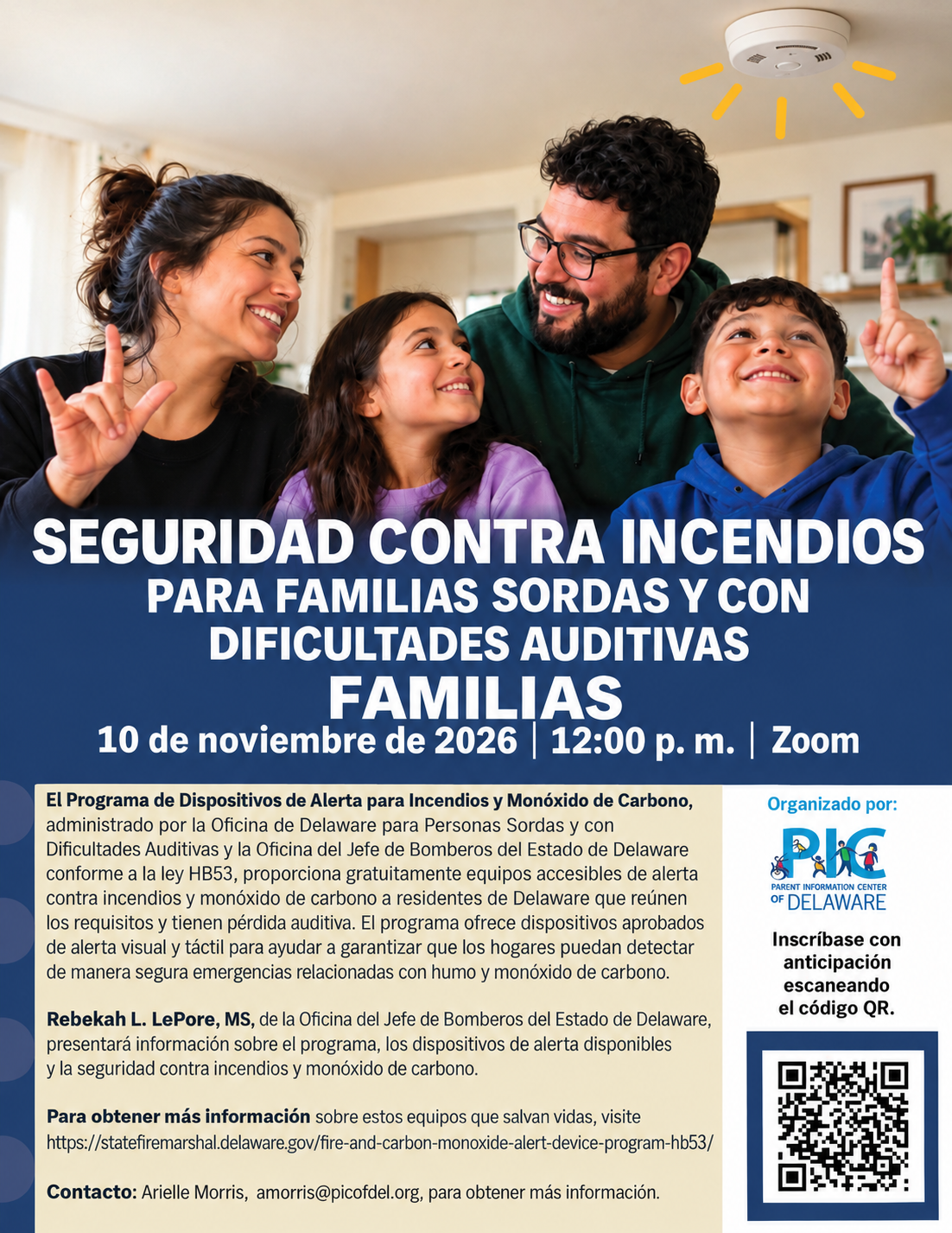
This special event will publicly highlight the new Accessibility Equipment Program (AEP). Established under House Bill 53, this vital life-safety initiative provides accessible visual and tactile alerting equipment—such as flash receivers, vibrating bed shakers, and alarm clocks with bed shakers—to eligible Delaware residents who may not perceive standard audible safety alerts.
Legislative sponsors of House Bill 53 and state program experts will be available to discuss how this initiative improves life safety for Delawareans who are Deaf, hard of hearing, late-deafened, DeafBlind, or blind with hearing loss.
American Sign Language (ASL) interpreters will be provided throughout the event to support communication access.
Event Details at a Glance:
• WHAT: Life Safety in Action: Fire and Carbon Monoxide Alert Device Program Presentation
• WHEN: Monday, September 28, 2026, from 10:00 AM to 12:00 PM
• WHERE: Delaware Department of Labor, 650 South Bay Road, Suite 19A, Dover, DE 19901, Rooms 140 and 141
• Key Photo/Video Opportunities: Live demonstrations of accessible visual and tactile alerting equipment, including flash receivers and vibrating bed shakers
• Prominent Attendees: Legislative sponsors of House Bill 53, state officials, and program experts
Program resources and application information are also available on the Accessibility Equipment Program webpage webpage -webpage –https://statefiremarshal.delaware.gov/fire-and-carbon-monoxide-alert-device-program-hb53/
We look forward to working with you in the future!